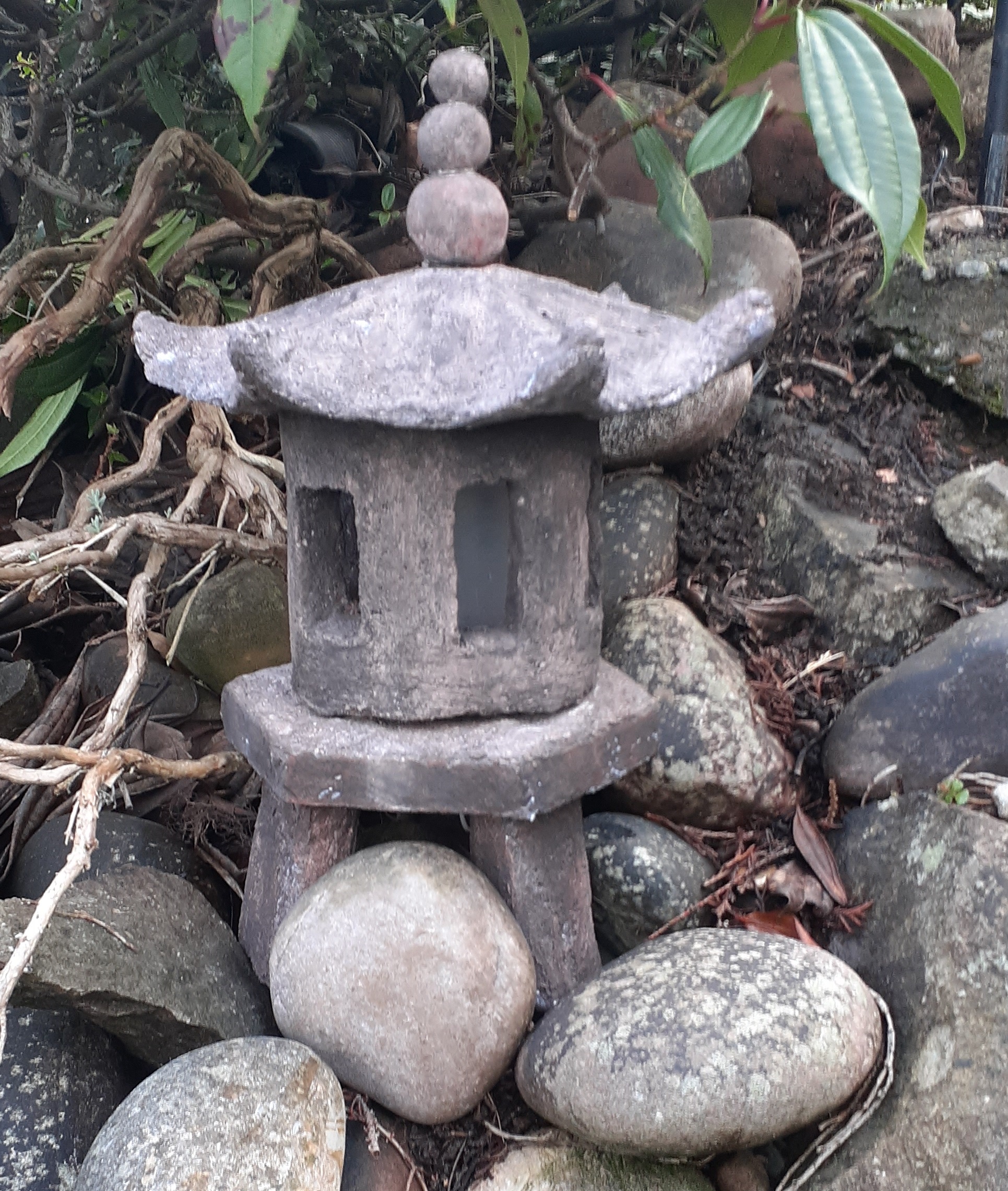
Background
Molds are useful if you need to make many copies of a shape. If you only need one instance or if the shape it too complex for molding then freeform building is best. This is essentially the process for stucco that is used as a building siding material.
Materials
- expanded metal lath
- rebar if needed
- mortar or Portland cement mixed with sand
- wire
- polyurethane caulk or construction adhesive
Tools
- flat masonry trowel
- tin snips to cut lath
- pliers for forming
- gloves
Directions
- Split the design into smaller unit that can be more easily fabricated.
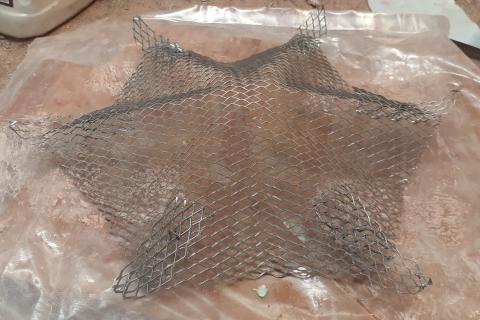
- Cut the lath with tin snips. Wear gloves. The cut edges are razor sharp.
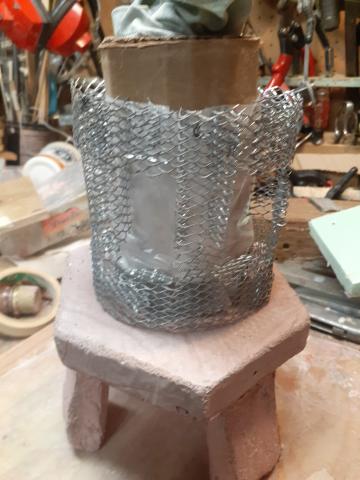
- Us pliers to form the shapes and wire to hold pieces of the armature togethers.
- Mix the mortar to a slightly stiff consistency so that it will stick to the lath without dripping through.
- Apply the mortar with a trowel forcing it through the lath. Try to achieve a 1/4 inch thickness.
- Allow the first coat to cure 24 hours. Then apply additional coats to build up thickness. After the last layer has cured 24 hours you can sand it to get a nice finish.
- Attach the units to each other with polyurethane caulk.
Image
Image
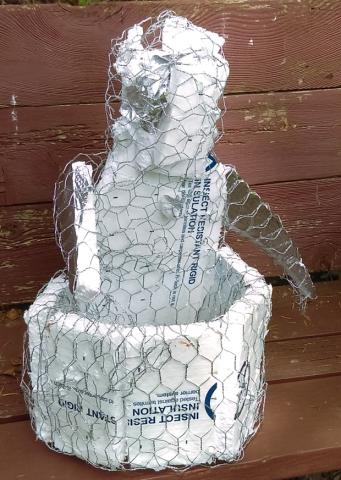
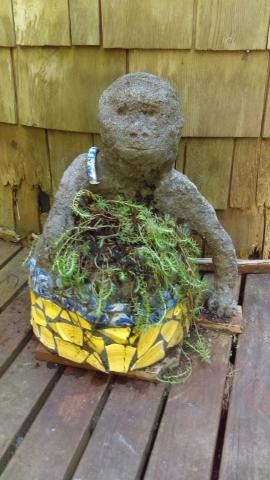
Styrofoam can be used to quickly build up a light weight form and then wrapped with chicken wire for reinforcing. This can be used with hypertufa which is also lighter that straight stucco. Hypertufa is a mixture of cement mortar, peat moss and perlite. Hypertufa has a more natural look but may not weather as well as pure stucco.
Image
Image
Grade